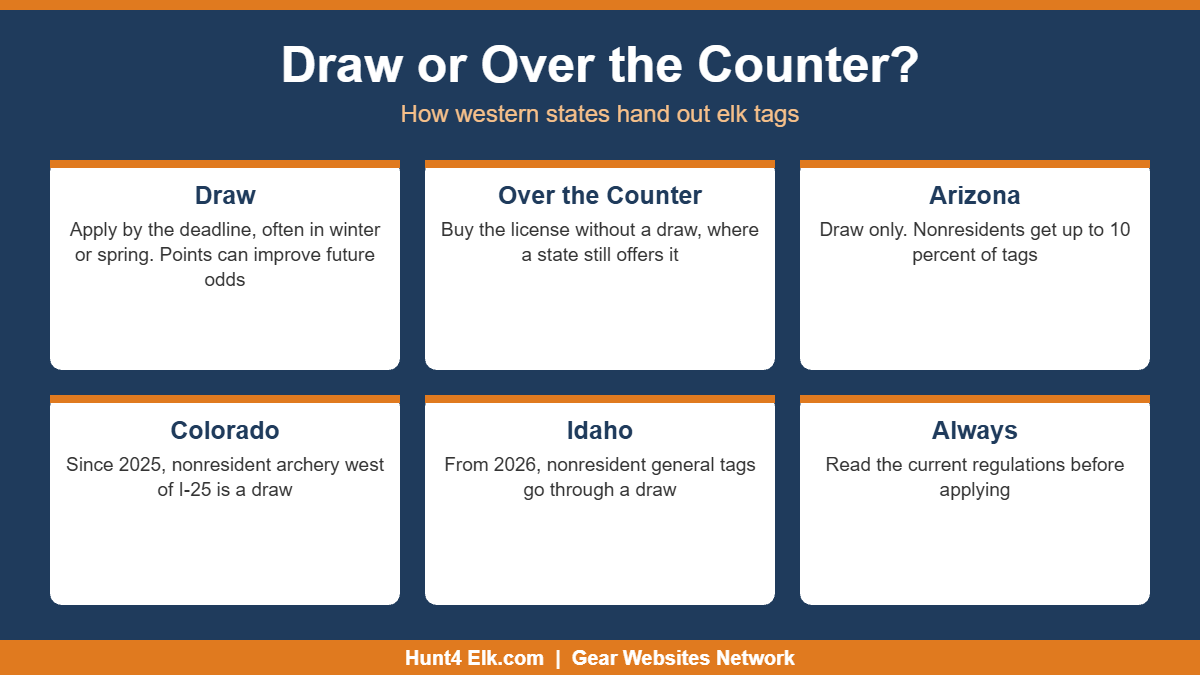
Elk tags in the West come two ways: by draw or over the counter. A draw means applying by a deadline and waiting for results. An over-the-counter license can be bought without a draw. Over the last few years, several states have moved nonresident elk tags from over the counter to a draw, so plans that worked a few seasons ago may not work today.
Recent changes at a glance
| State | Nonresident Tags | Recent Change | Agency |
|---|---|---|---|
| Arizona | Draw only | Up to 10% of tags to nonresidents | AZGFD |
| Colorado | Draw, some OTC rifle | NR archery west of I-25 to draw (2025) | CPW |
| Idaho | Draw | NR general tags to draw (2026) | IDFG |
| Kentucky | Draw | Largest herd east of the Mississippi | KDFWR |
Arizona
Arizona elk tags are issued only through the draw run by the Arizona Game and Fish Department, and applicants need a valid Arizona hunting license to apply. The application period usually closes in early February, and nonresidents are limited to up to 10 percent of the tags for a hunt. Arizona’s elk descend from Yellowstone elk released in 1913 after the native Merriam’s elk disappeared, and the state herd has grown to nearly 35,000 animals.
Colorado
Colorado has the largest elk herd in North America, estimated at around 280,000 animals. Starting in 2025, Colorado Parks and Wildlife stopped selling over-the-counter archery elk licenses to nonresidents for units west of Interstate 25 and Unit 140; those hunts now go through the draw. Nonresidents can still buy over-the-counter licenses for some rifle elk seasons and for archery elk in certain units east of I-25.
Idaho
For the 2026 season, Idaho Fish and Game moved nonresident general season deer and elk tags from first-come sales to a drawing, with the first application period in December. Nonresidents must buy a nonresident hunting license to enter that drawing. Hunters who apply can still enter the separate controlled hunt draws.
Montana and Wyoming
Montana is home to more than 150,000 elk, most descended from Yellowstone transplants that began in 1910. In Wyoming, the Jackson region alone holds four large herds totaling more than 16,000 elk. Both states change quotas and license rules regularly, so check the agency before planning.
East of the Mississippi
Elk are back in several eastern states thanks to restoration projects. Kentucky released its first seven elk in December 1997 and now has more than 11,000, the largest herd east of the Mississippi River. Kentucky issues its elk permits through a drawing.
Hunt4 Elk.com is written by hunters, not lawyers. Tag rules, prices and deadlines change every year, so always confirm with the state wildlife agency before applying.
Sources
- Colorado Parks and Wildlife: nonresident licenses
- Arizona Game and Fish Department: elk
- Arizona Game and Fish Department: 2025 draw news release
- Rocky Mountain Elk Foundation: Idaho 2026 nonresident tags
- Montana Public Radio: history of elk in Montana
- Wyoming Livestock Roundup: 2025 Wyoming hunt forecast
- Rocky Mountain Elk Foundation: two decades of elk in Kentucky